What the Sunk Cost Fallacy Really Means
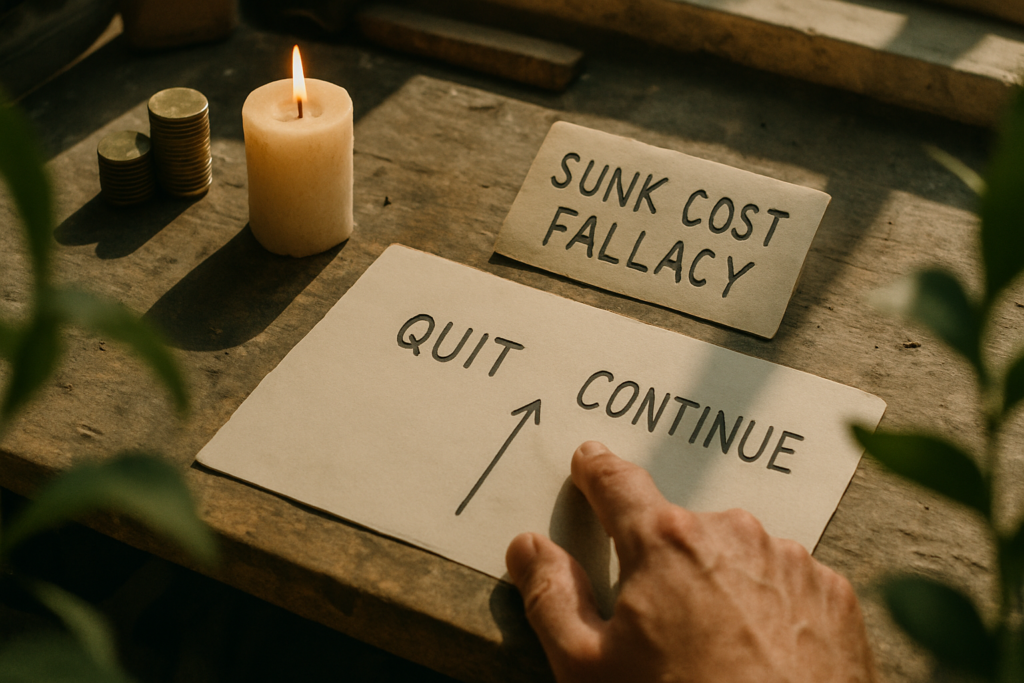
The sunk cost fallacy is the mental trap where we keep going just because we’ve already put time, money, or energy into something even when continuing no longer makes sense. It shows up everywhere: relationships, business projects, half finished TV shows. But gambling makes it especially dangerous.
Humans don’t back out easily. Part of the reason is emotional the regret of wasting what’s already been spent. But it’s also psychological. Once we’ve invested, we feel tied to the outcome. We tell ourselves, “I’ve come this far, I can’t quit now.”
In high stakes environments like gambling, this bias hits harder. The money lost starts feeling like a down payment on the win that must be coming. That belief distorts judgment. Instead of making a smart pivot or walking away, we double down literally thinking we’re being strategic.
The sunk cost fallacy answers a simple question the wrong way: Should I keep going because I’ve spent a lot? No. You should only keep going if it’s the best choice from right now, not because of what it took to get here.
Inside the Gambler’s Mind
Gambling doesn’t start with math it starts with emotion. Once you’ve sunk money into the game, a cycle kicks in: regret creeps up first. That internal punch of, “I shouldn’t have done that,” is quickly drowned out by a flicker of hope. Maybe the next bet changes everything. So you stay in the game.
Then comes the justification. You tell yourself, “I’ve already lost $500 I can’t stop now or it’ll all have been for nothing.” It sounds logical in the moment, but it’s pure sunk cost fallacy. The brain frames quitting as locking in failure. So instead, you double down.
This line of thinking isn’t just flawed it’s dangerous. Each loss gets folded into the emotional narrative, pulling you deeper. You’re not evaluating odds anymore you’re chasing personal redemption. That spiral is exactly how a bad streak becomes a financial trainwreck.
And the worst part? The longer it goes, the stronger the loop gets. Regret, hope, and justification feed each other. Until walking away feels harder than gambling more. That’s how the trap sets in, one decision at a time.
The Link Between Chasing Losses and Sunk Costs

At its core, the sunk cost fallacy is simple: once you’ve put time, money, or effort into something, it’s hard to let go even when it’s clearly not working out. Gambling feeds this bias like gasoline to a fire. That first loss? Painful. The second? Frustrating. But by the fifth or tenth, you’re not just trying to win you’re trying to undo.
This is how the fallacy fuels the urge to keep playing. The money already lost feels like an investment that needs a return, turning the next bet into a so called “solution” instead of what it really is: more risk. Emotional investment takes the wheel, pushing rational judgment into the backseat. You stop thinking, “Should I keep going?” and start thinking, “I have to get that money back.”
Cognitive distortions pile on. You believe you’re “due for a win.” You remember the one time you lost big and bounced back the next round so it’ll probably happen again. You start chasing worst case losses with best case hopes, forgetting the odds entirely. The gap between reality and perception grows, and the only thing shrinking is your stack.
There’s a reason casinos stay in business it’s not luck. It’s psychology. And understanding the sunk cost fallacy is a first step toward not falling for it. For more on how this trap works, check out this solid breakdown: chasing losses explanation.
Real World Consequences
You don’t have to look far to find stories of people spiraling from a single bad bet into financial disaster. Take Brian, a former accountant who first downloaded a betting app just to pick NFL winners with friends. Within a year, he’d lost over $30,000 chasing every bad weekend with just one more wager to “make it back.” Or Lena, a grandmother turned slot machine regular, whose weekend habit drained her savings and left her battling anxiety and sleepless nights. These are real people. And they’re not outliers.
Compulsive loss chasing isn’t just about numbers it rips into mental health and personal relationships. The constant flooding of dopamine and desperation rewires how gamblers think. They see quitting as defeat, not strategy. Even when they know the odds, even when they see their accounts dwindling, the sunk cost fallacy convinces them to keep feeding the machine. The money’s already gone, so they double down and call it hope.
Awareness helps, but logic alone often isn’t strong enough. Gamblers might fully understand they’re in a sunk cost trap and still go all in. That’s because the pull isn’t intellectual it’s emotional. The fallacy doesn’t just trick the brain. It hijacks the heart.
Breaking the Cycle
The sunk cost fallacy can be a powerful trap but with awareness and the right tools, it’s possible to regain control. Here are practical strategies for identifying and managing this bias before it leads to deeper losses.
Recognize the Moment
The first step is noticing when you’re starting to justify continued gambling based on what you’ve already lost, not future outcomes.
Ask yourself: Would I make this same decision if I hadn’t already lost money?
Be mindful of thoughts like: “I’m already in too deep,” or “I just need one big win to make it worth it.”
Track decisions and triggers: writing down what led you to place your last bets can help you see harmful patterns.
Tools to Reset Your Thinking
Taking steps to interrupt gambling impulses can reduce emotional pressure and restore clear thinking.
Cooldown periods: Set a mandatory break after a set number of bets or time. Even 15 minutes can shift your mindset.
Loss limits: Pre determine the amount you’re willing to lose in a session. Stick to this limit, regardless of perceived “progress.”
Journaling: Write down how you’re feeling and what you’re thinking after each session. This helps externalize emotions and track risky behaviors over time.
Know When to Seek Support
Recovering from loss chasing behavior isn’t about willpower it’s about using available resources and recognizing that help works.
Talk to someone you trust if you’re struggling to stop.
Consider counseling or support groups focused on gambling behavior.
Seeking help isn’t weakness it’s a strategic decision to protect your well being.
For a deeper explanation on how sunk cost bias feeds the urge to chase losses, visit the chasing losses explanation.
Smarter Gambling Habits
The healthiest mindset for gambling? Treat it like entertainment, not an escape plan. It’s a night out, not a side hustle. If you come to the table expecting to recover your losses or change your financial picture, you’re already compromised. You’re playing catch up, and the house always has the lead.
Smart gamblers approach every bet knowing it might lose. It’s not about winning it’s about playing with control. That starts with having guard rails: a fixed budget, pre set limits, and most importantly, a cutoff point that doesn’t move when you’re emotionally charged. Remove emotion from the equation. This isn’t personal. It’s math, risk, and probability dressed up in flashing lights.
And here’s the part that takes real discipline: knowing when to walk away. Not walking away in shame, or regret but with a clear sense you played your limit and kept your head. Walking away is a win if it means you stayed in control and didn’t chase false hope. Any game can end well if you stop playing before it owns you.